The Verdict: Mannheim-Heidelberg 2026
.
VERDICT: James J. Robinson’s 'First Light' and Mads Mengel’s 'The Guest' win big as a landmark 75th edition of Mannheim-Heidelberg draws to a close.
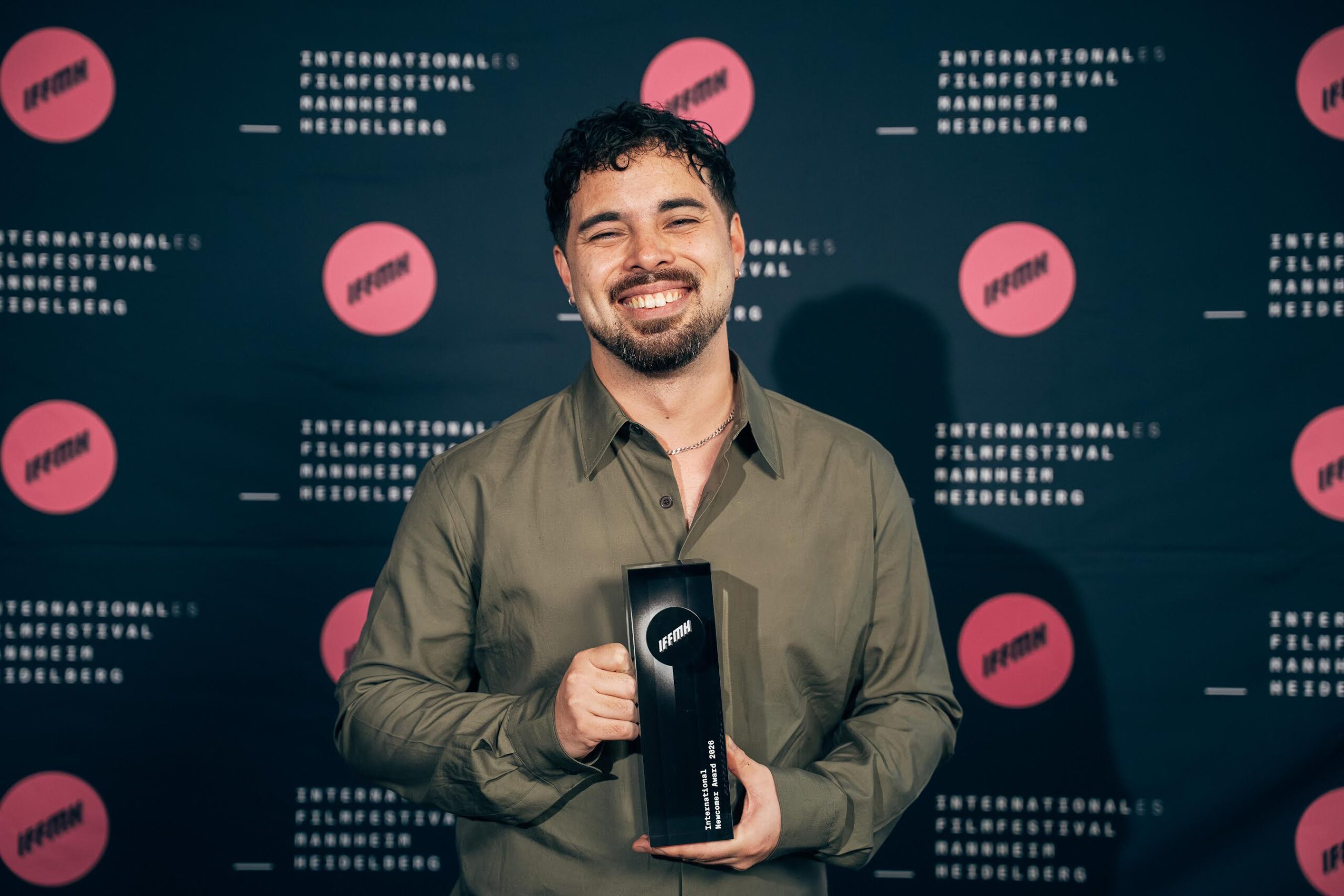
Australian-Filipino director James J. Robinson has emerged as the top winner of International Film Festival Mannheim-Heidelberg as the 75th edition draws to a close this weekend in the southwest of Germany. His debut feature First Light (read the TFV review HERE), an impressive slow-burn drama about a nun confronting spiritual doubt and institutional corruption, received the International Newcomer Award for the best film.
Mads Mengel and co-writer Christian Bengtson were the other big winners of the On the Rise competition, decided by a three-person jury made up of producer Bettina Brokemper and filmmakers Carson Lund and Asaf Saban. The Danish writing duo came away with the Rainer Werner Fassbinder Award for the best screenplay for their coastal-set family drama The Guest, directed by Mengel, which also won the FIPRESCI critics award.
Pinea Matoshi was the recipient of the Young Actors Award for Kosovar director Blerta Basholli’s intense, 90s-set drama of coming of age in a time of political strife, Dua. The Student Award went to Greek director Jacqueline Lentzou’s bold and playful reflection on the afterlife, activism, and the transporting power of art A Day in the Life of Jo: Chapter Phaedra, and the Audience Award was won by German director Naemi Ada for her Marseilles-set psychological drama Body of Glass. The prize of the Ecumenical Jury went to The Riverbank, directed by Enock Carvalho and Matheus Farias, a queer thriller with magical realist elements set in Recife.
The On the Rise competition does not require world or international premieres, meaning the festival’s quality programming is not constrained by losing films to the A-grade festivals with the most clout, and regional audiences can access a wealth of bold arthouse works from Cannes, Venice, Sundance and other key launchpads on the big screen. Marine Atlan’s hugely accomplished and fresh, buzzy debut La Gradiva was well-chosen as the Centrepiece title. The On the Rise competition comprised a strong, diverse mixture of formal innovation and topical issues. Also included in its line-up of sixteen features was Uta Beria’s unique, sensorial take on Georgia’s resistance movement, Tear Gas, and not one but two valuably frank and authentic takes on North America’s opioid epidemic, Union County by Adam Meeks and Daniel Blake Schwartz’s Tribeca-winner Cotton Fever.
Acclaimed Danish actress Trine Dyrhom, who starred in The Guest and often plays women pushing the boundaries of society, was a guest of honour at this edition, and the focus of a homage of three films. These were 2019’s Queen of Hearts, directed by May el-Toukhy (who this year won the top award in Venice for Woman Unknown); 2016’s The Commune by Thomas Vinterberg, a director she had already collaborated with when the Dogme 95 movement was at its height; and 2008’s Everybody’s Dancing, directed by her frequent collaborator Pernille Fischer Christensen.
Mannheim-Heidelberg chose Imagine Futures! as its defining motto for its landmark anniversary edition. Artistic and commercial director Sascha Keilholz stated a wish to turn this year’s event into a “laboratory for the future,” underlining an acute awareness of the insecure era that film festivals find themselves in globally, and the cultural landscape in Germany particularly.
Having weathered the disruptions of the Covid-19 pandemic in his first year taking over the reins in 2019, Keilholz must now steer the festival through a politically turbulent era in Germany in which controversies over AI are escalating, the far-right is on the rise again in the nation, and debates rage at a fever-pitch over how filmmakers from Israel and Palestine are to be responsibly represented. The festival was diplomatically careful to keep its statements around these sensitive subjects in the realm of the more abstract and general, but its titling of its anniversary publication Cinema, Film, Democracy made it clear that the inextricability of politics from curation and the creation of public spaces for cinema and debate, and the particular anxiety that is a constant in Germany around acting on the right side of history, are never far from the organisers’ minds.