
“We must support films that imagine the possibility of renewal”: Golden Apricot Yerevan’s Karen Avetisyan
.
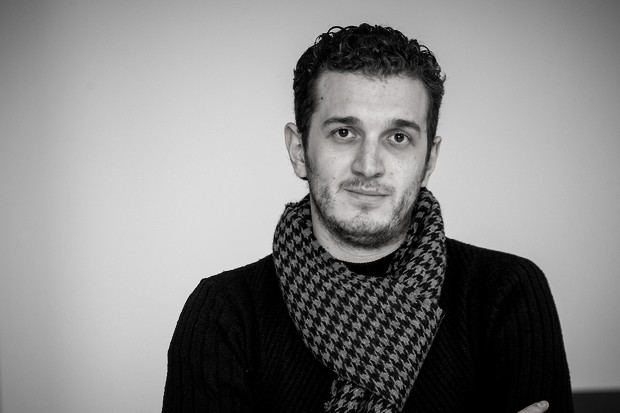
VERDICT: Karen Avetisyan, Artistic Director of the Golden Apricot Yerevan International Film Festival, advocates for a regional cinema that safeguards memory and connects the displaced.
In Yerevan, the capital of Armenia, the Golden Apricot Yerevan International Film Festival is being held for its 23rd year, from 12 to 19 July. The festival has faced strong challenges in recent times, amid war and ongoing geopolitical tensions in the Caucasus region, but it has weathered the storms, continuing to build on its solid reputation as both a significant regional showcase, and a festival with a strong programming vision in its selection of bold and compelling arthouse cinema from around the globe to bring to local screens.
The festival’s annual awards are replicas of Parajanov’s Thalers — the miniature artworks that Georgian-Armenian director Sergei Parajanov carved while a political prisoner in the Soviet era — a fitting nod that emphasises the value the festival places on identity in resistance. Golden Apricot’s Artistic Director, Karen Avetisyan, talked with The Film Verdict ahead of this edition.
The Film Veridct: Golden Apricot has always been a strong showcase for films from Armenia and filmmakers of Armenian descent, and for films from the wider region. What are some highlights we can look forward to this year?
Karen Avetisyan: We open the festival with In the Land of Arto by Tamara Stepanyan, a meaningful choice for us as it is a film about return, memory, identity and the emotional geography of Armenia. After opening the Piazza Grande programme in Locarno, its Yerevan premiere becomes something more intimate as the film comes back to the landscape, language and history from which it was born. Outliving Shakespeare by Inna Sahakyan and Ruben Ghazaryan continues an emerging Armenian documentary tradition, this time using theatre, aging and memory to speak about dignity and time. Marlene Edoyan’s A Fire There, set in an Armenian community in southern Georgia is another beautiful example of cinema crossing borders geographically, historically and emotionally.
From Georgia, two very different works – George Ovashvili’s The Moon is a Father of Mine, and Alexander Koberidze’s Dry Leaf – show the remarkable diversity of contemporary Georgian filmmaking from classical storytelling to a more experimental, poetic cinema of pure wandering, observation and atmosphere.
The regional conversation extends further south and west this year, toward Palestine, Lebanon, Egypt and the broader Arab world. This is important for us, because Golden Apricot has never understood “region” only as geography. We are interested in cultural proximity, historical memory, shared wounds and the ways cinema travels between places marked by displacement, political violence and the struggle to preserve identity. Kamal Aljafari’s With Hasan in Gaza is one of the most powerful examples. Built from rediscovered footage shot in Gaza in 2001, the film has become an almost unbearable archive of a world that has since been profoundly changed. It connects very naturally with the festival’s larger interest in cinema as an act of memory – cinema not only as representation but as preservation.
This year’s films connect Armenia, Georgia, Iran, Palestine, Lebanon, Egypt and other regional countries not through a single political or geopolitical statement but through a shared cinematic language of memory, loss, resistance and renewal. For us, placing them side by side is essential. It allows the audience to see not only individual films but a wider emotional and historical landscape, one in which cinema becomes a way of remembering what is fragile, questioning what is official, and protecting what might otherwise disappear.
TFV: War over Artsakh has meant very challenging times in recent years. What has been the role of the festival in wartime, and in processing the experience?
K.A.: The recent years have been extremely painful for Armenia and for our society. The war, the loss, displacement and uncertainty that followed, affected not only politics or public life but also the emotional structure of the country. In such moments, a film festival cannot pretend to exist outside reality. At the same time, it should not become a place of slogans. For us, the role of cinema has been to create a space where pain can be seen, shared and gradually understood. During times of war and crisis, cinema becomes a form of witness. It preserves faces, voices, landscapes, gestures and silences that may otherwise disappear. It allows personal stories to resist abstraction. When public discourse becomes overwhelmed by numbers, statements and political language, cinema can return us to the human dimension of experience.
For Golden Apricot, this has meant remaining a space of cultural continuity. To continue holding a festival in such a context is not an act of escapism but a way of insisting that life, memory and imagination must continue. We have tried to offer Armenian audiences films that help them think about loss, exile, identity, violence, dignity and survival not only through Armenian stories but through the experiences of other societies that have lived through war, displacement and historical trauma.
Now, as we move from immediate shock toward a more difficult process of reflection, cinema becomes even more important. It gives time to experiences that society often cannot process quickly. It allows trauma to be approached indirectly, poetically, sometimes through silence rather than explanation. This is especially important for younger filmmakers, many of whom are beginning to search for a language to speak about what has happened without reducing it to reportage.
I believe the role of a festival today is to protect that complexity. We must support films that remember, but also films that question, films that mourn, but also films that imagine the possibility of renewal. In this sense, Golden Apricot is not only a showcase of cinema. It is also a place where a wounded society can meet images from its own experience and from the experiences of others and perhaps begin, slowly, to transform memory into understanding.
TFV: Golden Apricot enters the FIAPF network this year. What does this landmark mean for you?
K.A.: For us, entering the FIAPF network is both an institutional milestone and a symbolic recognition of the path the festival has taken over more than two decades. It places GAIFF within a global professional framework that defines standards for international film festivals, strengthens trust among producers, sales agents, filmmakers, distributors and reconfirms Yerevan’s position as a serious meeting point on the international festival map. But beyond accreditation, this moment is also about responsibility. For a festival located at the crossroads of Europe, Asia and the wider region, FIAPF recognition gives us a stronger platform to represent voices, cinemas and cultural realities that are often underrepresented in the global industry. It allows us to build deeper relationships with the international film community while remaining faithful to what has always made Golden Apricot distinctive – its artistic curiosity, its regional sensitivity and its belief in cinema as a space for dialogue.