
We Shall Live Together
Zicjecemo zajedno
VERDICT: As unflinchingly personal as it is urgently political, Damir Markovina’s documentary debut 'We Shall Live Together' reckons with the ongoing tension of his family's exile from Mostar in the 90s.
War is a fracturing force able to inflict damage long after a ceasefire has been called, a reality that Damir Markovina — who was born in Belgrade, raised in Mostar and lives in Zagreb — reckons with in his intensely personal, emotionally charged feature-length debut We Shall Live Together, which had its world premiere in the documentary competition at the Sarajevo Film Festival, and follows his notable 2022 mid-length documentary Deserters, which also reflected on Mostar, the city besieged in 1992 in the Bosnian War, and memory.
The director reckons with the pain of exile from his hometown of Mostar, and its complexity as an ongoing source of family tension, chiefly around his politician father Roko’s reluctance to evacuate the family despite the escalating bloodshed in the ‘90s, and his later reluctance to return in peacetime, leaving the family scattered between countries. While this boldly frank, unsentimental survey of a destabilised past and unsettled future feels chiefly like a private, last-ditch attempt at reconciliation with an ageing parent, Markovina’s willingness to candidly lay these family faultlines bare should resonate widely in an era rocked by global displacement.
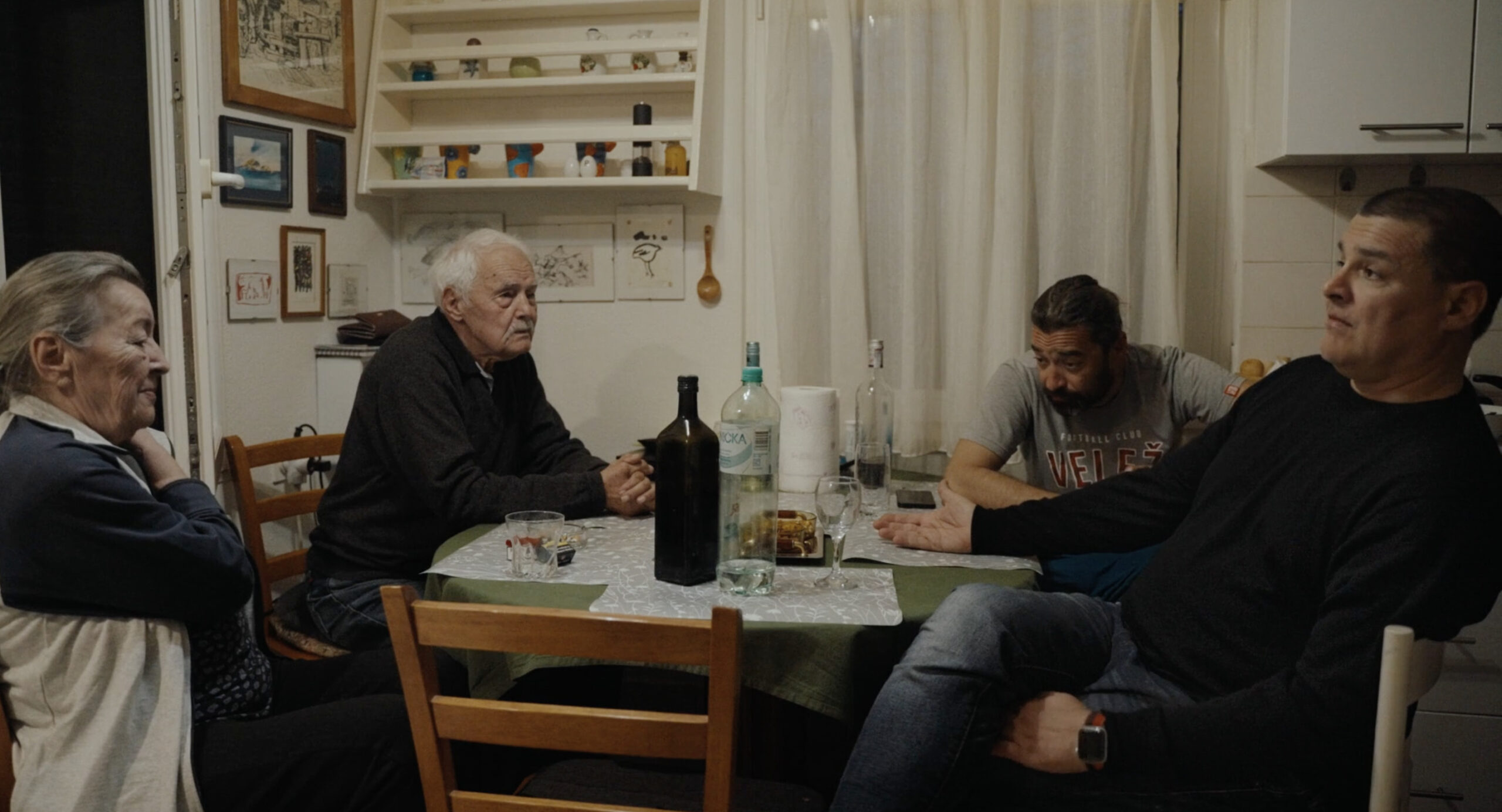
A world of resentment simmers up to colour kitchen-table conversations that are long overdue, or simply impossible to conclude, as Roko and his wife Zinaida, who live in self-imposed exile on an island, field hard questions from the director and his brother Dragan, now a left-wing intellectual and writer. Most films of this sort lean toward nostalgia and hagiography; in stark, refreshing contrast, the younger Markovinas have no desire to blindly perpetuate what they describe as the myth their father has forced them to live with.
Roko, as we learn, was a member of parliament for the League of Communists, the party that governed the Socialist Federal Republic of Yugoslavia after World War Two. A stubborn idealist, he insisted that the peoples making up Yugoslavia should stay unified, even as it was breaking apart and many of his party cohorts pragmatically shifted allegiances to throw their lot in with the nationalists on the ascendant. He kept his family in Mostar as war came, with them finally fleeing only through traumatic shell bombardment in 1992, and later voted against the Dayton Agreement, which ended the Bosnian War but codified division. He now claims Mostar, where he switched from an influential citizen to a pariah, is too riven by sectarian hatred to return.
Damir and Dragan are determined to debunk his refusal to adapt, arguing an idealism so inflexible over time can be destructive, and that vengeance is no route for healing and co-existence. Dragan, like thousands of others who left, now lives in Mostar again, rejects the idea it’s a ruined city, saying even the Serbs who backed nationalism should return to their place in the shared fabric. Damir is in Zagreb, but is equally aggrieved that his father endangered the family to save face in the community, and now cannot seem to move on.
Archival ‘90s footage showing Bosnia on the brink of war is spliced in, which provides a sense of tense immediacy and historical context to what could otherwise seem quite insular family dynamics, and is particularly helpful as a scene-setter for those not well-versed in the region’s history. In Sarajevo, there’s an anti-war rally; in parliamentary speeches, Bosnian Serb politician Radovan Karadzic, who would later be found guilty of genocide, declares Serbs will not accept becoming a national minority in their own country; Bosniaks are rounded up in Mostar (explanatory red text helpfully orients audiences through material especially chilling in hindsight.) Family home-video footage is projected onto walls, an artistic choice that underscores the past’s inseparability from the present, and its need of re-integration.
An urge to not just persuade, but listen and understand his father, is palpable in the conversations the director instigates, and in them a sense emerges of the extent of the losses his father experienced. As head of the civil defense in Mostar, formed after the supposed Yugoslav army armed and backed Serb forces and paramilitaries, he recalls burying 386 people killed by shells in a park he repurposed as a cemetery. He also recounts how the house the family had lived in for nearly two decades was seized and reassigned to a Croatian officer, who stayed there for seven years. His pain and bitterness are easy, through these recollections, to understand. The burning question of the documentary, which succeeds in bringing the demographic change in Mostar in ethnic composition to life far beyond mere statistical numbers, becomes how any citizens that have inflicted atrocities upon one another can co-exist and heal.
Director: Damir Markovina
Editors: Marta Breges, Vladimir Gojun
Cinematographers: Tomislav Krnic, Kresimia Stulina, Damir Markovina
Producer: Tamara Babun Zovko
Production companies: Wolfgang & Dolly (Croatia), Osoba D (Croatia), Al Jazeera Balkans (Bosnia and Herzegovina)
Sales: Wolfgang & Dolly
Venue: Sarajevo (Documentary Competition)
In Bosnian, Croatian
75 minutes