Yesterday the Eye Didn’t Sleep
Albarih aleayn ma namat
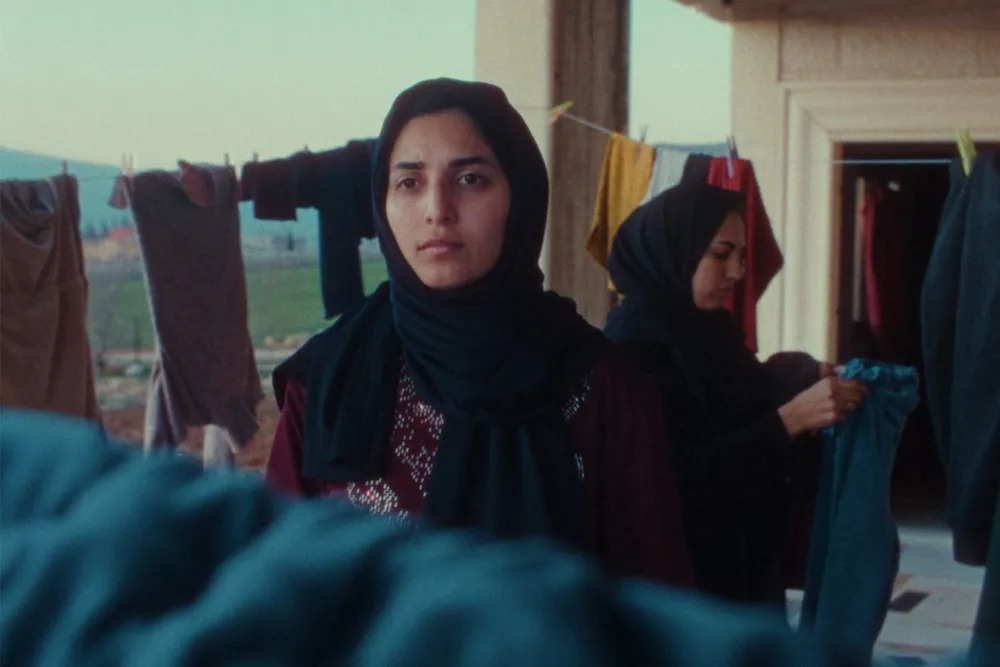
VERDICT: Two Bedouin tribes on the Lebanon-Syria border fall out in Rakan Mayasi’s ominous, exquisitely mesmeric feature debut 'Yesterday the Eye Didn't Sleep', which reveals a major directorial voice.
Deep, painterly shadows conceal secrets and runaways in the hushed and ominous world of Palestinian director Rakan Mayasi’s stunningly assured and impeccably framed debut feature Yesterday the Eye Didn’t Sleep, in which tensions erupt between Bedouins on the border of Lebanon and Syria.
Its moods are attuned to the mutable elements of rain and fire in a way that brings the poetic cinema of directors like Tarkovsky to mind, even as cracking suspense builds masterfully to a nail-biting ending, in a singular, genre-defying film about duty and defiance. A strong cast of non-professionals ably carries the mysterious, simmering drama, which brings a fresh sensitivity and flame of female rebellion to its treatment of tribal feuds and patriarchal tradition. The film, which screens at the Sarajevo Film Festival in a focus of films backed by the Doha Film Institute following its premiere at Cannes in Un Certain Regard, heralds a considerable new arthouse talent in Mayasi, and should enjoy a long festival run.
In the arid, mist-shrouded Bekaa Valley, where strict codes of honour govern disputes and arranged marriages, and clandestine sweethearts steal stolen looks and furtive encounters, a truck has been set on fire after a perceived romantic betrayal, and a feud blows up. Gamra, who has been blamed for the blaze, is on the run, and her cousin Yasser (Yasser Al Mawlah) goes out looking for her, with a reckless impetuosity that creates more problems than it solves when he accidentally hits and kills a man from the neighbouring tribe. Someone must balance out the tragedy. It falls to his sisters Rim (Rim Al Mawlah) and Jawaher (Jawaher Al Mawlah) to visit the aggrieved tribe’s Sheikh so they can potentially offer themselves as brides to safeguard the rest of their family. The young women accept this visit as a necessity, while agonising over whether they are really willing to surrender their lives to an unknown fate as a sacrifice. With trepidation and resignation, they get into a car with the stranger who will take them to the Sheikh’s house in the dead of night.
A lot of Yesterday the Eye Didn’t Sleep happens, as the title suggests, in the hours after nightfall. A blood-orange sky and a luminous moon create moments of vivid poetry, immaculately lensed by D.O.P. Pol Seif, that cut through the inky blackness and the coiled restlessness of these households, in which scrutiny never lapses, cars snake across landscapes on high-stakes business, and the only way for rebels to breathe freely and dream is by becoming fugitives. For all the rigid expectations that govern life here, it remains a borderland, where inhabitants sometimes disappear into Syria or return, and there is an overwhelming sense of transience.
A truce lasting for three and a half days only has been called, and as the time expires, panic looms as to whether the tension can be allayed and new allegiances settled, before violence is renewed, or the targets are forced to hightail it out of town. Fixed shots, whereby alarming events just off-screen are heard but not seen, are deftly used as a device to stoke this edge-of-seat unease, supported by an elegantly taut, restrained soundtrack.
A striking final scene in a field shot from afar creates a compelling, lyrical choreography of human fate. Whispered, conspiratorial conversations between the sisters at bedtime, and at a tribal meeting to determine their futures, carry a combustible spark in a film that shows that adherence to tradition and spirited resistance are not simple, diametric opposites, but endlessly complex and intertwined urges. This is an astute, considered thriller, that understands the weight and specificity of custom, but does not gloss over the pain of those cheated by fate, or trapped within stifling, never-ending cycles of vengeance.
Director: Rakan Mayasi
Writers: Rakan Mayasi, Wahid Ajmi, Pol Seif
Producers: Atata, Rakan Mayasi
Cast: Rim Al Mawlah, Jawaher Al Mawlah, Yasser Al Mawlah
Cinematographer: Pol Seif
Editor: Louis De Schrijver
Music: Ted Regklis, Abed Kobeissy
Production companies: Atata (Belgium), Lux Motus Tempus (Lebanon), Mayana Films (Germany), Naoko Films (Belgium)
Sales: Salaud Morisset
Venue: Sarajevo (Doha Film Institute Presents)
In Arabic
100 minutes