
Blossoming
A teraz wiosna
VERDICT: Kamila Serwicka’s subtle, evocative and courageously revealing debut doc portrait of her family as it regroups after the devastation of alcoholism signals a strong new talent.
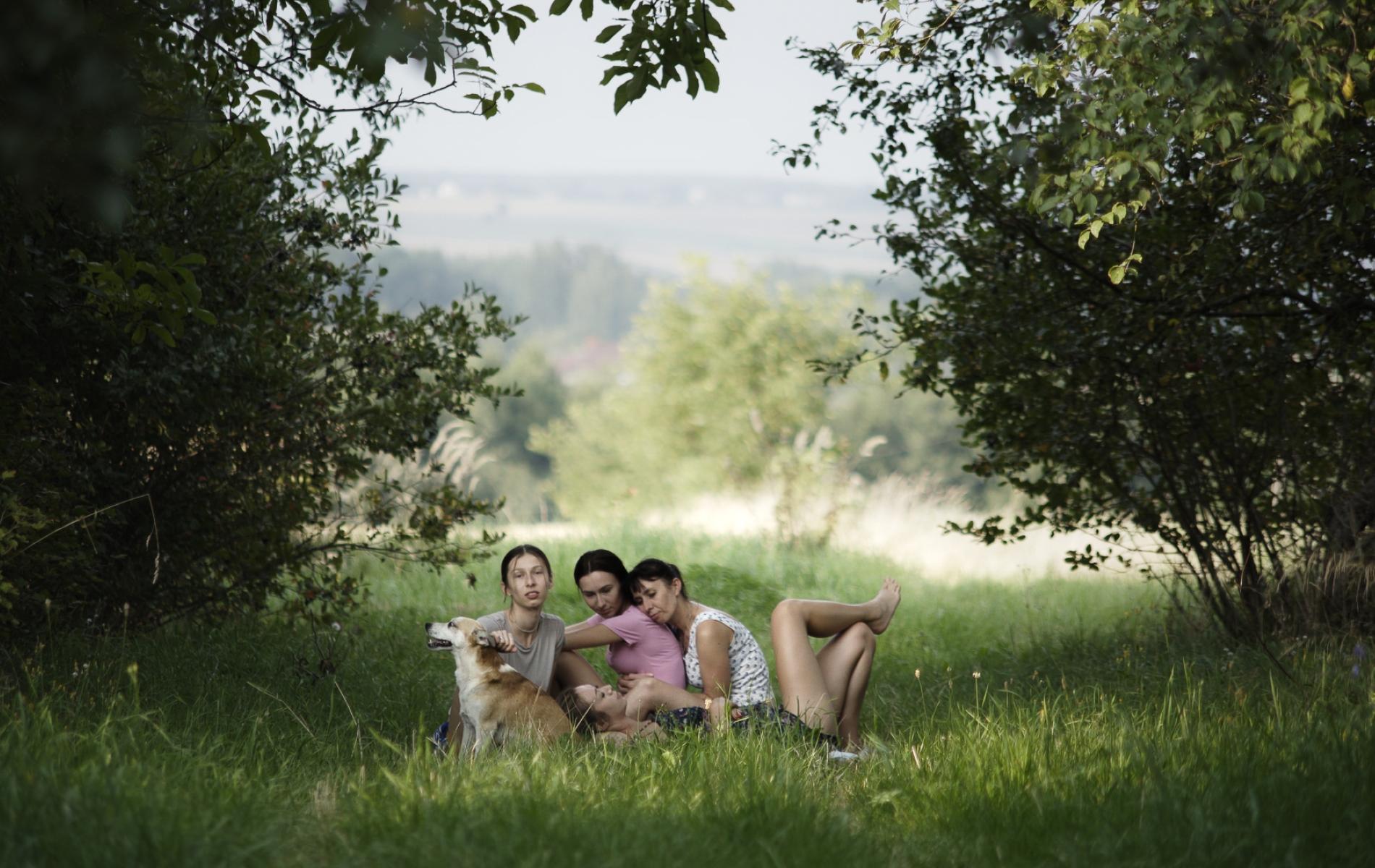
Polish filmmaker Kamila Serwicka tackles a vulnerably personal subject in her feature documentary debut Blossoming with candour and remarkable sensitivity, charting the emotional landscape of her family as it tentatively but surely rebuilds after turbulent domestic life with her alcoholic father. Screening in the international documentary competition at DOK Leipzig on the heels of its premiere at the Locarno Film Festival, where it won the Grand Prix of the Semaine de la Critique, it is a delicate, slender portrait of indomitable seeds of resilience. Serwicka does not make a spectacle of combustible violence, but rather captures subtle shifts of energy in the cramped space of a household in which several generations of women have lived with abusive partners, and anxious tension still resides in their bodies long after the men have departed. Its restrained and poetic obliqueness promises niche but appreciative festival audiences.
The surge in gender-based violence that accompanied the world’s COVID pandemic lockdowns, with their added stress and confinement, is not spelled out through facts and figures in Blossoming, which is as subtle and observational as it is quietly powerful. Rather, we feel the underlying unease as 23-year-old Kamila returns to the house in which she grew up after eight years, at the start of a lockdown in April of 2020, where six family members are squeezed in. Classes have gone online, and the Lord’s Prayer is recited around the dinner table, in scenes in which the women of the family — three sisters, a mother, and a grandmother — try to maintain a semblance of order and purpose, amid the ill-tempered demands and insults of the father. He asks one daughter go fill up his car, but she pushes back that he will just want to buy vodka, in one of many terse exchanges. Details are kept spare, but we learn that sporadic calls to the police are part of regular family dynamics; there has already been one court case, and several interventions.
Countering glimpses of the conflict, are scenes of the house interiors when empty, as a clock ticks, or wind chimes tinkle. The understated, finely tuned soundscape supports the reflective nature of a poetic film that knows how to use still moments to great effect, bringing audiences into an understanding that frazzled, exhausted nervous systems need calm spaces in which to heal. Scenes outside, as the women dig potatoes, or watch flocks of birds, reinforce the sense of bodily reconnection with nature, nourishment and safety. There is snowfall in many of these sequences, with the implication that winter is well underway, and a renewal is afoot.
“The same thing has been haunting this house for generations,” we hear, as an online therapy session gives more overt context and psychological insight. Kamila’s grandmother, who lives with them, also left an abusive marriage when younger, and raised four daughters on her own, pointing to a long family cycle that is tough to break. While Kamila steers the documentary through her camera, it is her mother, Agnieszka, that is positioned as the long-suffering backbone of the family. She withstands wider pressures from relatives (Kamila’s uncle pushes her to give her husband yet another chance), as she prepares to go through with a divorce and honour her daughter’s wish that they stop pretending that the abusive dynamics are normal.
Agnieszka can initially not think of any dreams of her own when asked, but she makes the challenging move to the Netherlands to embrace a new life, an endeavour we follow with some suspense through her calls back home, to find out if she will make a go of things there. Kamila’s father continues to participate on the film’s edges, but Kamila keeps this primarily as the story of the family’s women, as they come together to mark their growth, ending in 2026 when they have all moved out of home, in the aftermath of a traumatic situation that is not permitted the final say in this ongoing, inter-generational history.
Director, Cinematographer: Kamila Serwicka
Editors: Julia Oleksy, Jakub Darewski
Producer: Adrianna Redzia
Music, sound design: Joanna Szczesnowicz
Production company: Lumisenta Film Foundation (Poland)
Sales: Film Mundi (Neda Lukic)
Venue: DOK Leipzig (International Competition Documentary Film)
In Polish
77 minutes