
Fatma Said and the Abdelwahab Plan
.
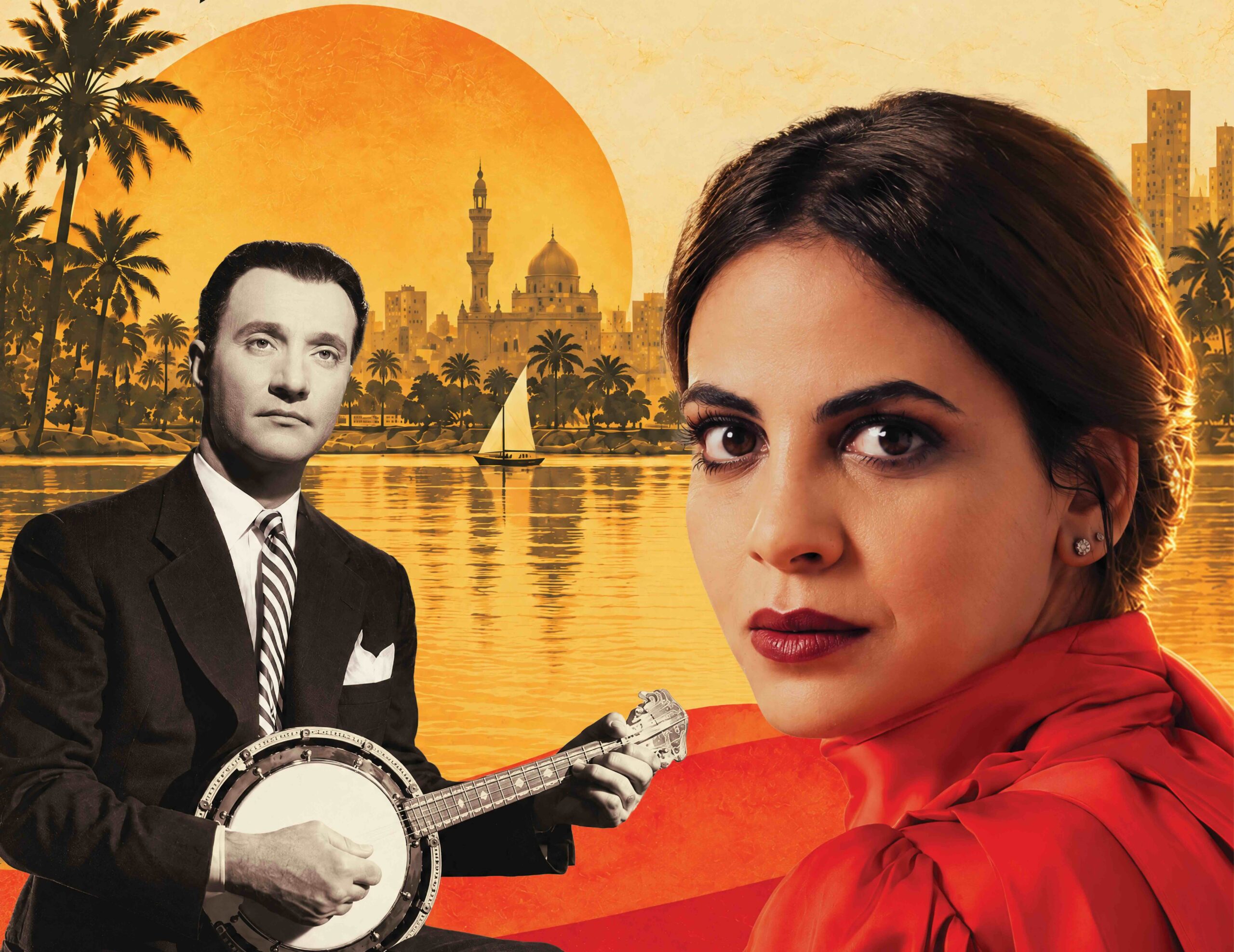
VERDICT: The Golden Age of Egyptian cinema and contemporary Arabic music are at the forefront in the slight but passionate documentary ‘Fatma Said and the Abdelwahab Plan’.
Per the final statement in the end credits, great music belongs to humanity. That sincere message forms the thematic and emotional core of Ralf Pleger’s documentary Fatma Said and the Abdelwahab Plan, which is in the – openly acknowledged – position of trying to reach a wider audience with a fairly niche topic. And while its 62-minute runtime makes it an unlikely candidate for mainstream theatrical distribution, the involvement of the German branch of ARTE implies it will enjoy its time in the spotlight on the small screen.
As the title indicates, the film revolves around the Egyptian soprano Fatma Said, who is based in Europe, specifically London and Berlin. When we first meet her on screen, she is getting on the subway in the German capital, delighting the U-Bahn passengers with some music from her home country. Her aim, she explains, is to make people aware of the existence of Mohamed Abdelwahab, one of the great names in Arabic music (in an odd twist of fate, he passed away in 1991, the same year Said was born).
Traveling between Berlin and Cairo, the opera singer recounts Abdelwahab’s life and career with help from her own family and the musician’s estate. The documentary also follows her endeavor to organize a concert where she will perform a selection of his songs, which comes with a set of difficulties as there is no surviving sheet music for any of his compositions. Furthermore, while Said is in the privileged position of having connections with prestigious venues willing to host the event, such as the Konzerthaus Berlin, the doubt remains: will her numerous fans show up for a performance in Arabic, derived from material that is largely unknown in Europe?
In that sense, having Pleger behind the camera is a major asset, given his extensive track record of music and cultural films (with subjects ranging from Beethoven to the notorious “worst singer of all time” Florence Foster Jenkins). He has a lot to convey in a short amount of time, and acquits himself admirably in that, for the relative simplicity of the structure and camera work, the information arrives with the same vibrant passion displayed by the film’s protagonist and chief driving force.
And considering the project’s aim is to increase awareness of Abdelwahab’s work outside of the Arab world, the work done from an archival perspective is immaculate, with black and white footage illustrating the scope of the man’s career: not only was he a prolific singer, he also revolutionized Egyptian cinema with his musicals, inspired by a trip to France. The blast from the past is so energetic and charismatic, one probably wants to watch those films straight away after finishing their viewing of the documentary (which, appropriately enough, received a Special Screenings slot at the Cairo International Film Festival, whose Classics lineup is doing a great job introducing Egyptian cinema history to new audiences).
The same goes for the new renditions and arrangements of the songs, which are meant to be the first step of a longer journey to preserve the work and make it more accessible worldwide. As it turns out, the scant runtime starts to feel deliberate, for this was merely the appetizer, the opening note, with a full symphony to come later.
Director, Screenwriter: Ralf Pleger
Cast: Fatma Said
Cinematography: Ahmed El Lozy, Zeina Khalil
Music: Mohamed Abdelwahab
Production companies: 3B-Produktion GmbH, Al Jazeera Documentary, 2DF
World sales: 3B-Produktion GmbH
Venue: Cairo International Film Festival (Special Screenings)
In English, Arabic, German
62 minutes