
The Good Lawyer
Un bon avocat
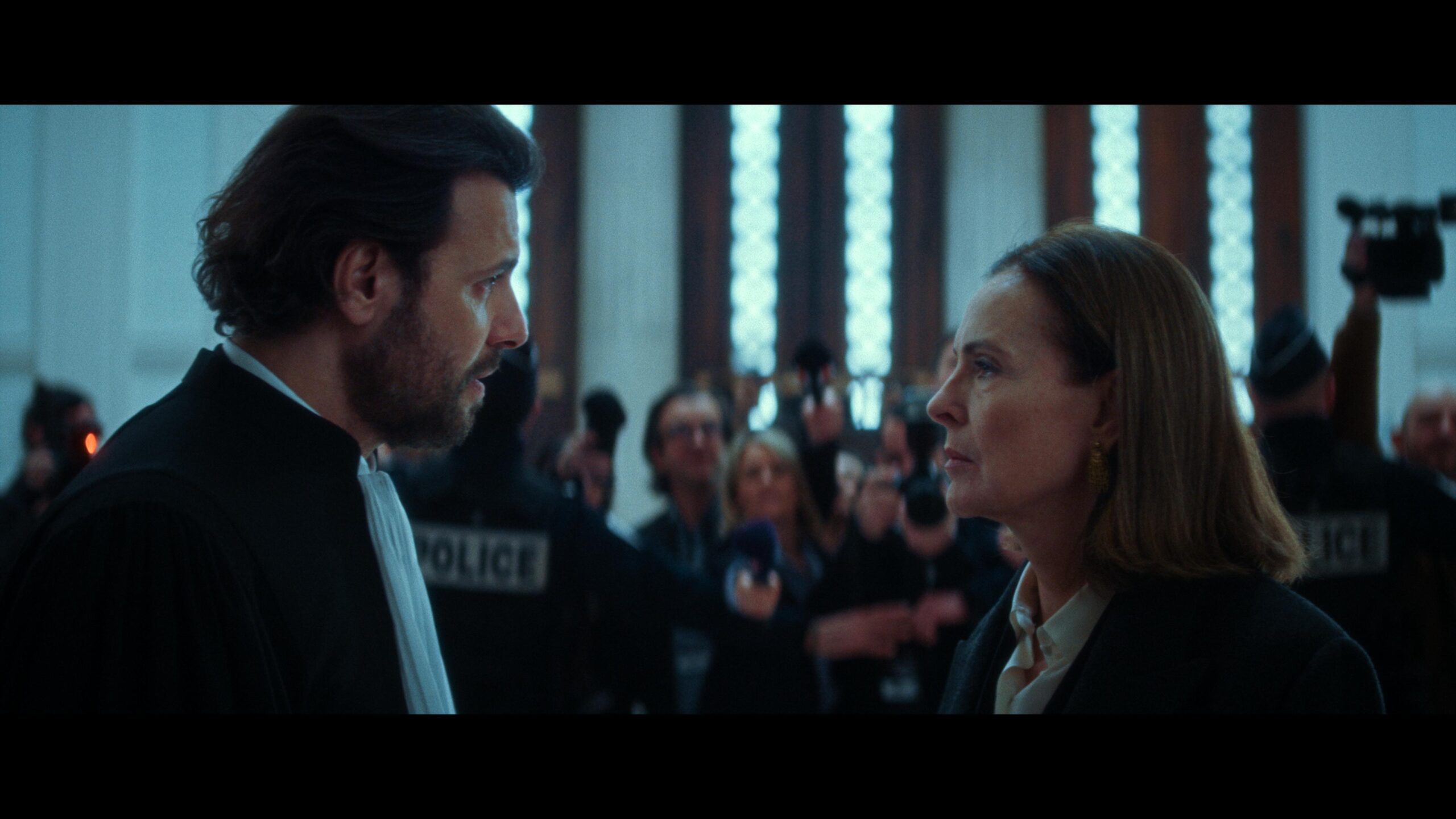
VERDICT: Laurent Lafitte shines as the titular jurist in the legal thriller ‘The Good Lawyer’, screened in Venice’s Out of Competition sidebar before heading to Netflix.
While it was a foregone conclusion John Malkovich would win the Best Actor prize in Venice for his performance in Wild Horse Nine, Laurent Lafitte could have been among those capable of giving him a run for his money, had The Good Lawyer been in Competition. Instead, festivalgoers got to enjoy Tristan Séguéla’s slick legal thriller in an Out of Competition slot, which may well be one of the few times the film will screen theatrically, as the opening logos revealed it’s set to have its mainstream release via Netflix.
A few years ago, Lafitte was on villain duty in The Count of Monte Cristo, where he played Gérard de Villefort, a previously irreproachable prosecutor who then decided to take part in a cover-up and false accusation for personal gain. Here, he’s Léonard Landry, a defense attorney with a sketchy track record: while he is good at his job, he also has a habit of defending criminals in ways that most would consider ethically dubious at best, and he’s a massive coke fiend: in the highly energized opening sequence, he exits a club after pulling a drug-fueled all-nighter, gets to his usual hangout and asks the bartender for his poison of choice – vodka with pepper, which he himself twists out of a pepper mill (three turns, no more, no less). As he later explains, that mixture can keep him going for 48 hours straight.
Except, that’s not quite what happens this time, as the stress of running between two court hearings (one of which he was forced into) takes its toll on the man, causing him to collapse from an overdose in full view of the judges. One rehab stint later, he has one week to prepare for the case which will determine his professional future, since his cocaine supply was on display in open court when he had his episode. His best hope is being defended by his colleague and former lover Iris Saint-Didier (Mélanie Laurent), but she’s skeptical. As chance would have it, though, their paths cross as he’s provided with material that could substantially alter the outcome of a trial she’s working on. An uneasy alliance is forged, and Landry also has to show the ropes to his young intern (Anthony Bajon), whose idealism is about to be shaken.
The main attraction is Lafitte, and he is positively on fire from an acting standpoint, regardless of which mode his character is in: the almost manic energy of the opening stretch (basically Trainspotting if Mark Renton had become a lawyer) is just as compelling as the more subdued – but still brilliantly arrogant – version we get once he’s out of rehab and genuinely trying to do better. The title is not ironic at all: Landry is a ridiculously good jurist, and he wants to match his legal acumen with moral rectitude, as that is the only way he’ll – possibly – be allowed to keep practicing the one profession he’s even remotely qualified for.
It’s almost a one-man show, although the actor spars admirably with Bajon and their banter keeps the emotional stakes relevant, even as the writing begins to descend into sub-Grisham territory (the twists and turns in the third act come close to stretching plausibility, although that is unlikely to be considered a bug by the average Netflix user). It’s perhaps not the right material for a continuing storyline, unlike Lafitte’s previous experience as a cop alongside Omar Sy, but it’s thrilling enough to ensure we want to see those two together on screen again at some point.
Director: Tristan Séguéla
Screenwriters: Marcia Romano, Simon Jacquet, Tristan Séguéla, Stéphane Sebag
Cast: Laurent Lafitte, Anthony Bajon, Mélanie Laurent, Carole Bouquet
Producer: Simon Jacquet
Cinematography: Augustin Barbaroux
Production design: Jan Houllevigue
Costume design: Elfie Carlier
Music: Amine Bouhafa
Sound: Nicolas Provost, Anne Gibourg, Nicolas Bouvet, Niels Barletta
Production company: ICONOCLAST
Venue: Venice Film Festival (Venice Open – Out of Competition)
In French
110 minutes