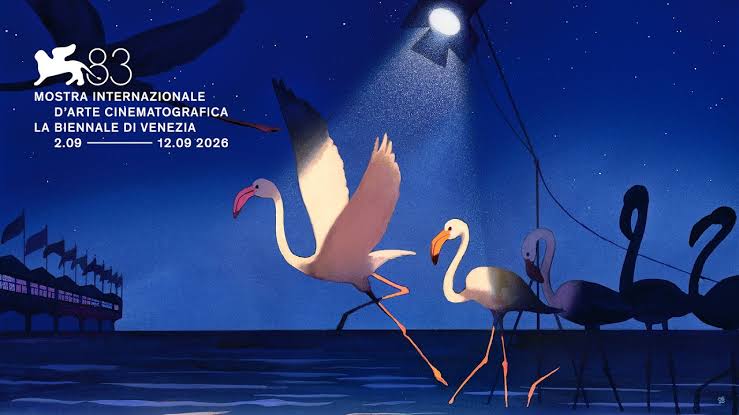
Venice 2026: A Melancholy Lido
.
VERDICT: As Venice 2026 gets underway, accredited professionals wonder if the event on the Lido is still a worthwhile experience, particularly for freelance journalists.
Mere days before the start of Venice 2026, it was reported the festival’s initial press conference with the official jury might not take place, due to what was referred to as a scheduling issue. Given what’s happened at other festivals in the past couple of years (most notably the Berlinale), and Venice’s own experience in 2025, when the awards discussion turned political over the decision to not award the Golden Lion to The Voice of Hind Rajab, some assumed this was a strategy to control the discourse during these increasingly fraught times. The scheduling snafu was subsequently sorted out, but by that point the damage had been done, at least figuratively.
The incident fed into growing frustrations among journalists, many of whom have publicly expressed skepticism at the prospect of continuing to attend. The general lack of major American productions in the lineup was a factor, as is the yearly headache freelancers have to deal with when it comes to securing accommodation on the Lido, where apartments have gotten gradually more expensive over the years. Italian critic Damiano Panattoni dealt with the subject very frankly in a widely circulated Instagram post, and publicist Olivia Alighiero became a newspaper story in her own right after taking to social media to share the – quite frankly – ridiculous living situation she had come across at one point.
On the film front, controversy has preemptively exploded over the inclusion of DAU in the Competition lineup, with the Ukrainian Minister of Culture denouncing its alleged ties to Russia, which have been disputed by the director Ilya Khrzanovskiy (who is, in fact, considered an enemy of the Russian people, and renounced his citizenship two years ago). Some critics have also expressed a reluctance to watch the film, due to its widely covered production history, including allegations of unethical working conditions over the course of the four-year shoot.
Conversely, curiosity abounds for the cinematic depictions of Palestine, most prominently the Competition entry Naza, directed by two of the four filmmakers behind the 2024 Berlinale prize winner No Other Land. Amos Gitai, who’s presenting his new work The Road to Jericho in Venice Open (the new moniker for what was previously the Out of Competition sidebar), is also bound to attract plenty of media attention, due to his well-known status as an Israeli director who is openly critical of his government’s actions. Political considerations are also highly likely to pop up in conversations about films from Arab territories as well as Iran, the latter being represented among the Golden Lion hopefuls by Ali Asgari’s A Bit of Light.
When introducing the selection in late July, Alberto Barbera said the amount of films had stayed roughly the same (although some Italian journalists raised an eyebrow at the seemingly excessive number of national films, with the caveat that some of them are more international in spirit, like Orizzonti opener The Girl with the Leica which is spoken in German). There has, however, been some reshuffling, namely with the move of the documentaries about cinema to Venice Open from their previous home in the Classics section, which now houses solely restored movies (most significantly this year, the brand new 4K version of Tinto Brass’s Deadly Sweet, which will be available on Netflix – which co-financed the restoration – after the end of the festival).
Finally, we would be remiss if we didn’t mention the main absence at this year’s edition: Giorgio Gosetti, who passed away in March. A well-liked figure on the Italian festival circuit, and a friend of The Film Verdict, he founded the independent section Giornate degli Autori (formerly Venice Days) in 2004 and would undoubtedly have been proud of this year’s selection, curated by Gaia Furrer and her team, which includes Robert Guédiguian’s new film A Woman Today. On a personal note, this writer has fond memories of many screening introductions, particularly that of the French zombie movie The Horde, which screened in 2009. On that occasion, Gosetti encouraged attendees to sidestep the usual festival etiquette and be as loud as possible, whether they liked the film or not. He is, and forever will be, greatly missed. Arrivederci, Giorgio.