
Busan 2026: The Verdict
.
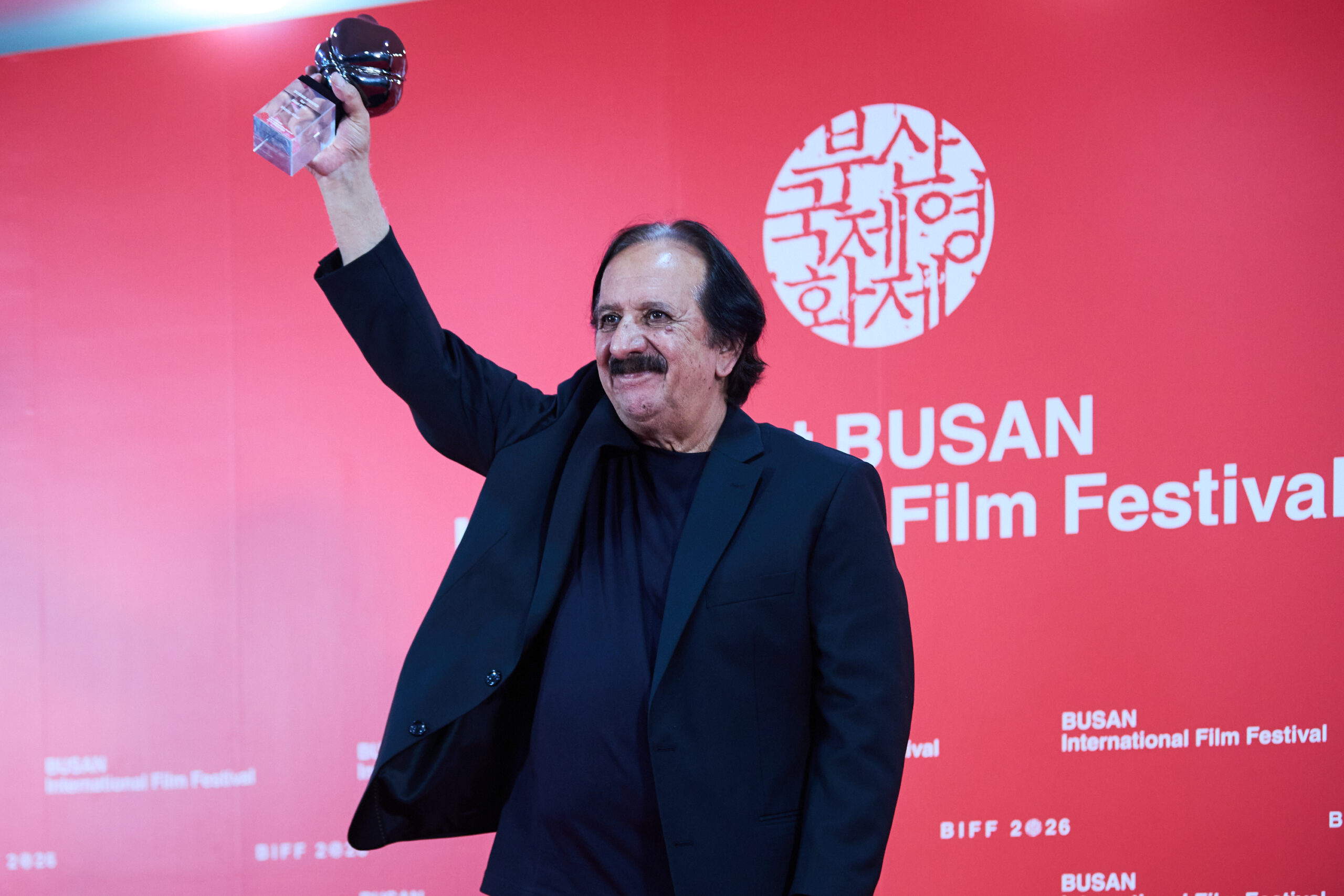
VERDICT: In its latest edition, the Busan International Film Festival offered proof of the Korean film industry's ruddy health, showcasing very diverse films from new Korean filmmakers, with surging audience numbers and a stellar line-up of guests.
During an open-air talk underneath the Busan Film Centre’s stunningly futuristic roof, curators from some of the most renowned Asia-oriented international film festivals were asked what they thought of the Busan International Film Festival. One said she was impressed by its eclectic programme; another said he was impressed by the response of its young and dynamic audience; yet another said she is drawn to the festival’s standing as a place where she could get to understand the latest trends in Korean cinema.
Unsurprisingly complimentary as the comments might be, they did provide a very precise picture of what has made the festival a must-go for industry executives, filmmakers and cinephiles alike as it enters its fourth decade. Celebrating its first year as an “A-list” festival – a ranking bestowed by the International Federation of Film Producers Associations (FIAPF), and one that elevated its standing alongside big beasts like Cannes, Venice, Berlin and Toronto – the festival reported a total attendance of 277,027 for its screenings of 315 films during its ten-day run this year, an increase of 14% over the 30th edition last year.
More than 900 international guests graced the festival this year, according to its final report. Apart from the Oscar-winning Malaysian-Chinese actor Michelle Yeoh, recipient of the honorary Asian Filmmaker of the Year award, the festival also hosted Alfonso Cuarón (in town with his son Jonás for a masterclass and the Asian premiere of the latter’s Campeón Gabacho), Maggie Gyllenhaal (who presented her short film Flesh Impact), Hirokazu Kore-eda (whose Look Back will premiere in Korea after its bow in Busan), Lav Diaz and the French actors Isabelle Huppert and Charlotte Gainsbourg.
While local film buffs were palpably chuffed by these international “guest visits” – as shown by the near-impossibility for international guests and journalists to score tickets to talks on the festival’s otherwise well-designed online ticketing system – the Busan audience demonstrated exceptional enthusiasm and support for their own filmmakers as well. This is of course largely due to the festival’s very tangible support of Korean talent. For example, there was the decision to give the prestigious opening-film berth to The Table: Day and Night. A sequel of sorts to his 2016 film The Table, Kim Jong-kwan’s latest film is an occasionally charming yet mostly lightweight portmanteau of four different love stories unfolding in the same café.
But it’s a moot point to judge The Table: Day and Night on its own artistic merits. Just as The Table provided a platform for its then up-and-coming cast (Jung Yu-mi, Han Ye-ri, Jung Eun-chae and Im Soo-jung), the significance of Kim’s latest film lies with its young actors, according to festival director Jung Hanseok.
“I believe the actors in this ensemble are among those who will carry Korean cinema into the future,” he told The Film Verdict after the opening ceremony on October 6, referring to a cast that includes the multilingual Shim Eun-kyung (who starred in Japanese filmmaker Sho Miyake’s Locarno winner Two Seasons, Two Strangers) and Kim Min-ha (of Pachinko fame). “I cannot remember the last time I saw such an impressive group of actors brought together in one film. It also struck me as exactly the kind of film that more than 5,000 people could enjoy together on opening night. That’s why we selected it as the opening film.”
Jung’s vision is embodied further in the three Korean films chosen for the festival’s top-tier competition this year, each of them selected as an indication of the many trends and possibilities emerging in the domestic film industry today.
With its bifurcated structure and a story driven by fateful encounters and awkward relationships, Lim Ha-yeon’s Beach Fictions is perhaps a film that bears the closest resemblance to the Korean films (that is to say, the ones by Hong Sang-soo) getting traction on the festival circuit. More telling, however, is the presence of Long Long Night, which signals the potential in animation films that has long been overlooked in Korean cinema. The highly-stylised horror movie Shaving offers proof of how a younger generation could up the ante and steer genre filmmaking in different ways.
In the context of the festival competition, however, they prove to be no match to the one veteran in their midst. With his 11th feature, the 67-year-old Iranian auteur Majid Majidi scooped Busan’s top prize with Midday Meal, in which a conscientious teacher is driven to extremes in taking care of his impoverished charges, risking his own financial well-being as he confronts the imminent closure of his school and the disintegration of his future life with an ailing mother. Featuring a barnstorming turn from non-professional actor Mohammad Rahimi, Majidi delivers a blistering j’accuse against the social injustice that is pushing Iran’s rural poor into oblivion.
Accepting his award at the festival’s closing ceremony on October 15, Majidi paid tribute to his late mother and “all the brave people of Iran who have stood firm through all these years [in] resisting oppression”.
“You are all aware that our cities have recently been brutally bombarded,” said Majidi. “One school in Minab was hit, and innocent students suffered. . . About 150,000 facilities have been bombed, including schools and hospitals, leaving around 5,000 casualties. What crime did our people commit? Nothing, except that our people wanted to live independently.
“They will stand firm until the end and fight to gain their independence back. I wish for a world where there would be no war. And I pray for a future where the world would be full of peace, love, and brotherhood,” he concluded.
Meanwhile, returning Busan alumni featured prominently among the laureates. Indonesian filmmaker Eddie Cayhono’s Ibuku, which won the Special Jury Prize, was a project presented at Busan’s Asian Contents and Film Market 11 years ago. In her acceptance speech for the Best Director prize, Taiwanese filmmaker Robin Lee Yun-chan told the audience how she was in the same dress she wore 20 years ago when she went to Busan to present her last film, The Shoe Fairy, in the festival’s New Currents section.
In the Vision Asia competition, Mongolian director Byamba Sakhya also made a triumphant return to Busan after 13 years away, with his social-satire-meets-rebellious-romance Zogsool scooping the NETPAC and Fipresci awards. In the Vision Korea sidebar, social realist dramas Beyond Love’s Horizon and Full Moon are the big winners with three prizes each. Just as in the main competition, however, a younger generation of Korean filmmakers have offered glimpses of their very diverse tastes and talents, ranging from the subtle and slow-burning human dramas of Baler and Cosmic Trace to the artisanal, reflective and sometimes achingly funny stop-motion animation of The Flower.
Even beyond all these competitive sections and their litanies of endless prizes, the festival offered undiscovered gems aplenty. Among those receiving world premieres at Busan this year is Dhara, Anuruddha Jayasingha’s beautifully filmed feature about the blooming relationship and socio-philosophical conversations between a monk and an injured militant in a far-flung monastery in rural Sri Lanka. Similar in its reflections about the clash between the political and private spheres in history and life, Margharita Ferrari’s directorial debut FÖA – Once Upon the Future offers a taut screenplay and remarkable performances as the film pits a pregnant teenager against three activists trapped together in an apartment in downtown Genoa during the local police’s brutal crackdown on the anti-G8 demonstrations in July 2001.
And these are just the films. Founded partly as a project designed to kickstart Busan’s transformation from a run-down industrial port city into a more sophisticated 21st century metropolis, the festival prides itself for its civic engagement and for its attempt to foster a sense of place for people across the geographical and social spectrum. A spin-off now into its ninth year, taking place in Nampo-dong, the neighbourhood where the festival was based before the move to venues in the newly developed Centum City in 2011, is the Community BIFF. This initiative gets audiences involved in the selection of films (in programmes called “Request Cinema” and “The Cinephiles Strike Back”) and other activities. Meanwhile, BIFF Everywhere comprised 39 screenings of 28 films in locations across the city, including in markets, temples and even the airside spaces at Busan’s airport. Just like the extraordinary army of eager volunteers teeming around the main venues, these satellite events provide the Busan International Film Festival with its own distinctive ambience and identity, just as much as the glitz, glamour and garlanded auteurs on show at the centre of things.
With reporting by Clarence Tsui and Cho Hyo-jin.